

Transition as Part of Sustainable Tourism Practices in 2025
DENPASAR, mybalinews.com — The Hotel, Restaurant, and Café (HORECA) industry in Bali continues to demonstrate its role as a driving force for sustainable tourism practices.
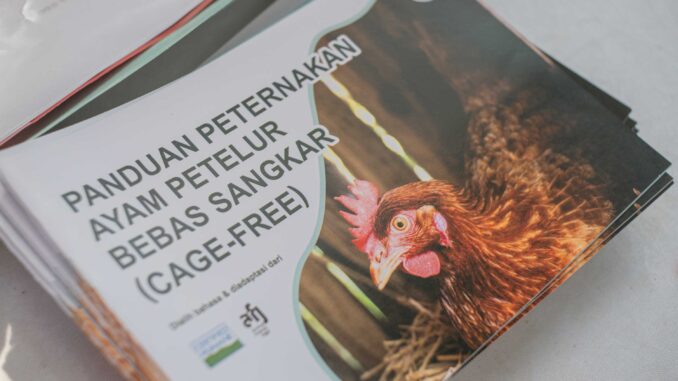
Throughout 2025, a total of 16 HORECA businesses in Bali have begun transitioning to the use of cage-free eggs as part of their commitment to animal protection and welfare, food quality, and social responsibility within the supply chain.
Across Asia, companies are increasingly responding to consumer demands for more secure and ethically conscious consumption, particularly regarding animal welfare issues.
Progress in the implementation of full cage-free transitions has reached 70.5% in reported progress, not significantly different from last year’s 69.8%.
The transition to cage-free eggs reflects a broader shift within the food and beverage industry, where ethical considerations and sustainability have become integral to business decision-making.
Cage-free eggs come from farming systems that do not use battery cages, allowing laying hens greater freedom of movement and the ability to express natural behaviors, such as perching and laying eggs in nests.
This step aligns with evolving global standards in the tourism and hospitality sectors, where responsible sourcing and animal welfare policies are increasingly used as benchmarks of a brand’s credibility and integrity; particularly for international hotel chains and tourism destinations such as Bali.
“For Begawan Biji, the use of cage-free eggs is a tangible step toward building a more ethical, transparent, and sustainable food system within the HORECA industry, especially in Bali,” said Chef Andrew, representing one of Bali’s HORECA establishments.
Beyond ethical considerations, industry players also recognize that using cage-free eggs contributes to higher-quality food ingredients while enhancing consumer trust, as awareness of food origins continues to grow.
Both domestic and international tourists are increasingly attentive to sustainability issues, including how the food they consume is produced.
Encouraging a More Responsible Supply Chain
Rising demand for cage-free eggs from the HORECA sector is also impacting Bali’s food supply chain. On one hand, demand continues to grow as more businesses commit to transitioning. On the other hand, local supply from cage-free egg producers remains limited.
This situation presents both challenges and opportunities. For local farmers, increased demand from the HORECA sector opens pathways to develop more ethical and sustainable farming systems.
For the tourism industry, it underscores the importance of cross-sector collaboration; between businesses, farmers, local governments, and civil society organizations to build a strong and responsible supply chain.
“The transition by Begawan Biji to cage-free eggs is driven by our commitment to organic and sustainable practices, not merely as a marketing strategy. As part of our farm-to-table concept, consistency from upstream to downstream is essential. This process is carried out gradually and responsibly, ensuring that animal welfare, environmental health, and food quality are upheld,” added Chef Andrew’s representative.
Part of Bali’s Tourism Transformation
The adoption of cage-free eggs in the HORECA sector forms part of a broader transformation toward sustainable and ethical tourism in Bali.
As more HORECA businesses take concrete action, this practice is expected to serve as a best practice model for the tourism industry in other regions of Indonesia. Furthermore, this transition is anticipated to drive systemic change within the national egg-laying poultry industry, moving it toward higher animal welfare standards.
“We see the transition toward cage-free commitments as a strategic step that will define the future of the HORECA industry. This is not merely about meeting market demand, but a fundamental transformation that reflects ethical responsibility and sustainability. Animals Don’t Speak Human is committed to supporting this process through education, policy advocacy, and strengthening cross-sector collaboration. Our role is to ensure that the transition is tangible, measurable, and sustainable, so that animal welfare becomes an integral part of business practices that support more responsible tourism and culinary industries,” said Fiolita Berandhini, Director of Animals Don’t Speak Human.
Throughout 2025 and beyond, the HORECA sector in Bali is expected to continue strengthening its commitment to the consistent and transparent use of cage-free eggs. Consumer education, supply chain transparency, and support for local farmers will be key to ensuring that this transition delivers meaningful and lasting impact.
Through these efforts, Bali once again reaffirms its position as a tourism destination that excels not only economically, but also upholds ethical values, sustainability, and responsibility toward living beings and the environment. (kanalbali/RFH)

Be the first to comment